Women’s Healthcare: Miscarriages and the Caution Doctors Already Take to Perform Lifesaving D&Cs 

We were living in Park City, Utah at the time. I have been told that living at high elevation is what saved my life. I was pregnant, and we were visiting Portland, Oregon (sea level) when I learned our baby no longer had a heart beat. That day I spoke to my Utah OBGYN, who assumed the baby would pass normally and to be safe, gave me some warnings. 

We made our way to lunch with a college friend, who we had not seen in years, and his wife. My husband and I were seated before they arrived. I had already been to the bathroom twice, soaking my pad. My cramping felt like childbirth. Our friends arrived. We ordered. Sweat pooled on the back of my neck. As each excruciatingly painful built up and passed, I remained still and smiled as if nothing was wrong. Our food arrived. I felt another gush. I excused myself from the table. By the third time I needed to excuse myself from the table, I had soaked my clothes. Now I needed to excuse my husband. He had the car keys and I needed more feminine hygiene supplies. How do you tell your friend that you haven’t seen in years and his wife that you just met, “Um, so I have bled through my protection four times since arriving. Every time I go to the bathroom the fetal tissue expelled is greater than the time before?” You tell them vaguely what is going on and then you leave. 

Once in the car, I called my OBGYN. I wanted to make sure I was not overreacting. 

“If this does not settle down in two hours, you need to go in.” She urged. 

We waited, the bleeding increased and we made our way to pick up our sons, who were with Dave’s best friend. 

Trying to keep my mind off of things and knowing I would have to break our OMSI Science Museum date, I asked our children if they wanted to get ice cream from Ruby Jewel. “Of course we do!” Our youngest giggled, “Mom, do you know this will be the sixth time we have gone to Ruby Jewel since we came to Portland?” 

“That’s absolutely perfect.” I responded. 

We made our way over to the Mississippi Avenue neighborhood of Portland where we enjoyed our delicious ice creams. Then I paused to share our news. 

“Ok guys, you know last night I think we lost the baby, well, now things are getting a little weird so we may go get things checked out at the hospital.” 

I saw the concern and fear wash over them: “Mom, we want you to be ok.” 

We made our way to the hospital. This was before Roe was overturned, and furthermore we were in liberal Portland, Oregon, a politically liberal city. My husband dropped me and my older son off. “You come with me.” I said. I grabbed my son’s hand while Dave parked. I checked in and then talked with the nurse. She took me seriously and quickly admitted me. Calm. I was calm. I was assigned a male nurse. When he talked to me, I maintained my steely Midwestern composure. “I am bleeding a lot. I’m from out of town and my doctor recommended I come in.” I asked him about D&Cs and what they could do. 

Oh, we don’t perform D&C’s at our hospital.”

“Really?” I pushed. 

The kids had made their way to my room. They were understandably bored, hungry and my youngest kept asking, “Mom, when will this be done? When can we leave? I am hungry.” 

“We are not leaving until we know what is going on with Mom.” 

Hours passed. I urged my husband to take the boys and leave. “They need to eat.”  They left and I walked myself to the bathroom. I could not believe all the bright red blood. It was coming out of me.  “How can I still be standing with this much blood?” I thought. As I sat on the toilet, a clot the size of a plum, flipped out and landed on my ankle. I stared at it transfixed. I grabbed some toilet paper to use to pick up the clot. I cleaned myself up, lifted my IV bag off the hook and walked back in my room as a sweet young med tech tried to get my attention. I felt another gush. It felt like someone had just broken my water. My legs were soaked in blood. I saw the blood on the floor.

“Um, I do not know what is happening. I think I need some help.” I stood there motionless as if my not moving would make it all stop. 

“What do you need?” She asked. 

“I think I need to go to the bathroom again. Will you help me?”

“Of course. Whatever you need.” 

I kept apologizing and blood kept gushing. “I do not know what is happening. I do not understand.” Fruitlessly, I tried to clean off the blood. We walked back to the bathroom. The tech pulled up my blood-soaked gown so I could sit on the toilet. There was no urine, just more blood. The tech helped me stand. 

I was back in my hospital bed and texted my husband, “The bleeding is worse. I am afraid.” I felt like I was going to pass out and then another uterine bursting cramp and a gush. 

I needed the bathroom. I was delirious and completely covered in blood. We made our way to the bathroom again and I wondered if I was going to die. 

Back in my room I found the ultrasound tech. Maybe she can help me live. “Please. Please. I do not know what is happening.” She asked me what I needed. 

“The bleeding won’t stop. There is so much blood. I need to use the bathroom again,” 

“Whatever you need.”

In those moments my husband came rushing back to the room, leaving our kids in the car. “What do you need?” He asked. 

“I don’t know. Help me. Please.” 

I did not know. What I knew is that the lower half of my body was soaked in blood and like a fast flowing river the bleeding would not stop. 

The ultrasound tech inserted the ultrasound wand. “Ouch! Shit! That hurts!” I screamed. The pain was otherworldly. Dave held my hand. For several minutes and from every possible angle, she viewed my uterus. Like a faucet turned on full blast, blood continued flowing out of me. I whimpered. I did not cry. I pleaded and kept asking her what was happening. “Oh honey. I know. I know. I know what you are going through. There really is a lot of blood.” 

I was, in a way, giving birth. She pointed and showed me the gestational sac on the screen. There was no baby. I felt the air leave my body. Even though I was bleeding, even though I was completely covered in blood, somehow I had convinced myself that maybe my baby would beat the odds and as a result would be hiding, waiting for all the bleeding to stop. Nope. My baby was gone. 

Once I accepted that my baby was really gone, I was acutely aware of every sound, smell and sight. The room was bright. The machines were loud. The air smelled like death. I felt naked. I saw the red. I felt the liquid. I was lying in a pool of my own blood — blood I have only seen in really bad horror movies. I wanted to run. I was weak and kept bleeding. My blood pressure kept dropping.

Finally, really, finally, after he took a long lunch break and completely vanished for hours, my male nurse came into my room. That is when my lovely Ultrasound tech insisted, 

“She really needs something for the pain. You need to help her!” 

After confirming with the doctor, the nurse gave me a shot of Dilaudid. Until then I had not been given an IV, nor had I been continuously hooked up to the blood pressure or oxygen monitors. I have no idea why. I asked the nurse if he would take my blood pressure. “I feel dizzy and I do not feel right. Please. Please take my blood pressure.” He handed my husband a blue plastic barf bag, slipped a blood pressure cuff on my upper left arm, and cautioned my husband, “If she throws up, come find me.” I felt the pump, pump, pump of the cuff and watched my blood pressure go down, down down to 54/33. 

“I don’t think that is ok.” 

The nurse lowered my bed and said, “Oh, it’s fine.” Once my bed was lowered, my pressure went back up to 77/33. I know enough about blood pressure to know that once it goes too low that the body starts shutting itself down. I knew if I kept bleeding and my blood pressure kept dropping that we would have a bigger problem. After the nurse left we texted our doctor friend. When we shared my blood pressure numbers with him he insisted,

“Push your call button now!” And this is an ER doctor dude who does not scare easily.

Again I whimpered. Then I cried. I could not believe the intense and constant pain. The pain medicine was not helping. That is when I asked my husband,

“Am I going to die?”

“No. No. You are not going to die. You are going to be ok.”

I already had these two beautiful and amazing children. I needed to fight for them. Unfortunately, my body had a different plan. My blood pressure did not stabilize. They kept switching IV bags for another IV bag. We stopped counting at around ten bags of Packed Red Blood Cells (an IV where Plasma has been removed from the Red Blood Cells). Repeatedly I heard the phrases “this hemorrhaging needs to stop and low blood volume.” Yet through it all the doctor kept saying while simultaneously being freaked out, 

“You are so healthy. You should have already had a transfusion. Wow. Living at high altitude and now being at sea level is saving your life. I cannot believe this.” I couldn’t either. Because I live at 7,200 feet (yes, that’s right) and was now at approximately sea level, I had extra hemoglobin.

Immediately before surgery I was able to change out of my second completely blood-soaked gown. I asked the med tech if things were bad and she shook her head. That is when I saw a lake of blood on the bed. “Only really bad head wounds or gunshot victims have this much blood,” I thought. She and my husband helped me remove another bloody gown. I saw blood on the floor, blood on the bed, clots stuck on the fabric of my gown and the heavy red stains making up the baby I had just lost.

Let me be clear, it took until I was on the precipice of death before the ER would call a surgeon. When we met with the surgeon, they said,

“We need to do a D&C. We need to stop the bleeding. The only way the bleeding will stop is if all the fetal material is removed.”

Under general anesthesia I had the surgery. Once they performed the D&C, which removed all the fetal material, my bleeding stopped. I was able to go home in the middle of the night. 

About Women’s Healthcare.

 Here is the deal: The deck is already stacked against women. By the time the mother’s life is in danger, every second counts. When there are really severe penalties to medical care, time is wasted trying to decide if a doctor can and or will intervene, which only adds extra dangers to an already dangerous situation. Even if there is no heartbeat, with these total abortion ban laws, medical professionals actually cannot intervene, or better, may not choose to intervene in enough time fearing risk of breaking the total abortion laws

Keep in mind, one in four known pregnancies result in miscarriage. Now please consider miscarriages and the caution doctors already take to perform life saving D&Cs. Any additional legal friction such as a TOTAL ABORTION BAN will arguably lead to significantly more deaths. Further, many anti abortion laws do not have a carve out law that protects the mother in cases like mine, and even those that do require already-cautious doctors to be even more risk-averse because of their draconian penalties. Even in a place where abortion is legal, even in my case, which was during Roe, the medical establishment was very cautious about making interventions. 

In the end, here is why I am speaking up again. Recently, I opened up about my miscarriages and the D&Cs I received as a result. I have been challenged, bullied, attacked and told I have no idea what I am talking about regarding how doctors treat a miscarriage or how easily a doctor will perform a D&C.

I have the unique and traumatic experience to know more than most how and when a D&C is performed. 

If you think my experience is rare, think again. Other data suggests, 10 – 10% of all recorded pregnancies end in miscarriage. If you are shaking your head because you somehow think a Trump presidency will make things easier for pregnant women, women who have miscarried, you are misguided! 

You have not walked in our shoes. You have not been near death, and because legal liability and fear of malpractice is already such a colossal deal, you have not experienced the caution medical professionals already take to perform life saving D&Cs. You have not experienced a time when the health of the mother is the last thing a doctor is able to consider. Yet, somehow you have convinced yourself that a GOP who will take away these rights with a TOTAL ABORTION BAN will somehow magically be more open minded and make exceptions to protect the mother? YOU ARE WRONG!

I cannot overstate this enough: when I was in the very liberal city of Portland, Oregon, before Roe was overturned, the medical staff still waited until I became critical before they considered performing a D&C. Only once they absolutely confirmed that the baby was gone and that the only way my bleeding would stop was to perform a D&C, did they perform a D&C.

Sure, maybe it was different for your wife when she miscarried. Well, then she was lucky. Would you really want to keep rolling the dice on that? How about the women who were like me? Before Roe v. Wade was overturned by Donald Trump’s Supreme Court, I had two D&Cs. I was treated for 2 other miscarriages with Plan B known as the morning after pill. All of these procedures saved my life. Think about the real world consequences of these legal decisions.

If you want the best odds for the life of the baby and the mother, vote for a president who cares about women’s healthcare and wants to protect women. 

Tagged : / / / /

The LDS Garment Change: Paralyzed by my despair and reminded of all of those cap sleeves

I was raised in the Church of Jesus Christ of Latter Day Saints. I learned through a post written by the Salt Lake Tribune’s Peggy Fletcher Stack that the women’s garment will now be sleeveless. This change makes me mad. (Yes. I know the rules have changed before. Before 1923, garments had full-sleeved legs and arms.) My assumption is that I will be criticized for complaining or for not having a testimony of the restored gospel of Jesus Christ:

“Shame on you for bringing up the coercive control you felt yesterday. Don’t you know that everything is better now. This is God’s loving way of adapting the rules for his children. [Your thoughts] are thoughts seeded by The Adversary [used] to stir people up to feeling slighted and then justified in hating the church.” 

Sure. [insert my shoulder shrugs here]

Even if an evil force is influencing my thoughts (I don’t believe one is), I have real feelings that actually need to be addressed. Others, like Lindsay Hansen Park, have beautifully addressed these LDS garment changes more concisely than me. Nevertheless, I believe all voices matter. That is why I am offering my perspective here. 

I am struggling to see beyond these triggers and my innate reflex to behave and not embarrass my mom. From what I have read online, I am not alone. I have been sitting in my chair for hours, paralyzed with grief. What do I do with all the shaming and shunning now that the rules change? Will people be able to openly drink coffee tomorrow (and without sneaking their minivan through a Starbucks drive through)? I am perplexed and confused.


The trauma resides tucked away in the cheap polyester fabrics and sweaty crotch of my Mormon underwear. When I stepped away from Mormonism I left my bedroom drawer filled with my newly washed LDS garments. For years my garments remained untouched. I was superstitious and haunted by thoughts of bad things happening. As I walked by my dresser drawer I was consumed with visions of crashing airplanes. Instead of there being a perfectly preserved garment-covered-torso-display-of-my-worthiness, there would be nothing left—all because I chose not to wear my Mormon underwear!

I believed I would be punished if I threw them away or gave them away. Eventually I needed the space and determined it was time to empty the drawer. I heard there was a special way to dispose of them and I did not want to get it wrong. Something about cutting out all the symbols and putting the symbol part of the fabric in a different trash can. Ultimately, I left the drawer alone – (until we moved). I did not want to break my Mom’s heart. Emptying that drawer would signify that I was one step further away from who she thought I would be. It was one step further away from her dream of a family reunited in the Celestial Kingdom. I couldn’t do that to her. I would find a way to wear those garments again, even if it killed me.


A few years earlier we were at the National Mall in Washington DC. I was five months pregnant. My husband and I met up with some friends; we were waiting to watch the Fourth of July fireworks. It was like a billion degrees outside and maybe five-hundred percent humidity. I was wearing a garment-covering outfit: a dress that went down to my knees and sleeves down to my elbows. I wished I was wearing a dress more appropriate for the summer heat, like a sleeveless dress.

Soaked in my own sweat, my hair out-of-the-shower wet, perspiration dripping down my face, I was resolved to air out my garment-soaked boob area. I pulled up on my bra, which was resting on the outside of my garments. Then I unsnapped my bra, leaving it draped across my chest. My crotch began to itch. I tried to re-snap my bra because maybe I should be more obedient. Next I hoped to discreetly adjust my bunched up Mormon underwear, which was firmly trapped up my nether regions. I feared contracting a UTI which would only make my already complicated pregnancy worse. In this sea of thousands, I whispered to my husband, “It is dark. Do you think anyone will notice if I take my clothes off?” As the words left my mouth, I was wracked with feelings of shame. I had covenanted to my Heavenly Father to wear these garments as a show of commitment to live a good and honorable life. The words of my sister ring through my head as she exclaims and points at me from across the room,

“OH MY GOSH! YOU ARE NOT WEARING YOUR GARMENTS!” (She has since left the LDS Church.)

The shame I felt in the moment she called me out is a shame I carried with me FOR YEARS and it was the shame I felt while sitting on the National Mall. My clothes stayed on. So did my bra. So did my Mormon underwear.

I knew someone would notice. I preemptively felt their side eyes. Women check. We always compare each other. We check garment lines and skirt lengths. I recall an experience my mom had as a new convert to the Church. She wore a sleeveless dress to Relief Society (the women’s organization meeting). The Mormon missionaries had neglected to tell my parents about the temple garment (and the requisite de facto dress standard it requires) before baptizing them. Consequently, instead of learning about this special commitment you make to God by wearing His sacred underwear ahead of time, my mom learned about garments through social shaming. Instead of having grace for her, the church women let her know that what she was wearing was not “what we wear here.” The trauma is deep rooted. Until this week, that trauma manifested through checking sleeve length. 

And really, it’s not just garment lines Mormons check. Maybe that is why I am upset. I don’t mind that the rules change. What I mind is the coercive control and shaming based on arbitrary rules and systems I experienced. What am I supposed to do with that? When I needed help on my mission, I called home. My mom did not want me breaking the rules, and I was breaking the rules. My mom asked my brother to talk to my mission President to tell me not to call home. He did. My mission president spoke with me. I was disciplined and admonished that I needed to have more faith. Now the Mormon missionaries are allowed to video chat with their family each week. Why was I wicked then for doing what’s righteous now? Where do I set the humiliation and othering I experienced from my family and my faith?

Tell me I need to be happy about God’s love and letting the Mormons drink caffeine on BYU campus and now having sleeveless garments. Regardless, if the Atonement and Jesus and rules that change to help members of a certain dispensation are all real, there is also a flip side. These shifts don’t repair damage the old rules caused. To be a member in good standing, for starters, I need to be baptized, worthy, a full tithe payer and work to attend the temple, which includes wearing the temple garment. I wonder if The Church of Jesus Christ of Latter Day Saints would consider their own accountability by following their own teachings and a spirit of Christian forgiveness. (I am not holding my breath.) If they do, I would suggest that these sleeveless garments and their makers apologize to those of us who bore the weight of this arbitrary rule and its accompanying coercive control. I would hope they could work to heal and repair the damage they caused no matter the shifting rules or changing hemlines, that they could tell a young me and all the people like me that we are worthy and we are good. Calling home on a mission during a health crisis was not Satan’s influence, nor was abstaining from wearing garments during a hot DC summer while pregnant. (Yes. After the fourth of July fireworks I took some lifesaving measures to not overheat and to save my baby. Some days I chose not to wear my garments). 

Copyright 2024 CrazyUS.com

Why a memoir: an exposition, including journal writing 

For like twenty years, on and off, I have been working on my memoir. Really. Stops and starts. That is what it has been. I test the waters. When I do write about a family member, or suggest to family that I might be writing my story, I am often met with pushback and threats. I shut up. Like I am trapped in a sinking car, I want to breathe so I stop writing. As I surface, I realize that my words want to come out. Honestly, I wish my family understood that this is my story, yet I don’t expect them to. I don’t want to share their secrets or make my story them about them. Instead, I offer them grace. I take deep breaths. I go to therapy. I write privately. When I do freak out or worry about being sued, (yes, I have been threatened), I think of the words of writer Anne Lamott:

We write to expose the unexposed. If there is one door in the castle you have been told not to go through, you must (open the door)…You can’t do this without discovering your own true voice, and you can’t find your true voice and peer behind the door and report honestly and clearly to us if your parents (or siblings) are reading over your shoulder. They are probably the ones who told you not to open that door in the first place. You can tell if they’re there because a small voice will say, ‘Oh, whoops, don’t say that, that’s a secret,’ or ‘That’s a bad word,’ [Instead]…Write as if your parents (and siblings) are dead. 

I have lived another entire lifetime since I first had a story I wanted to tell. I married. We had two beautiful sons. My heartaches like infertility, suffocating loss, and serious health crises have (hopefully) filled me with compassion and the ability to confidently and lovingly share my truth. I have taken that time to learn how to set boundaries and break cycles. I am a work in progress. I know my past lurks in the shadows, and like cocaine in the 1980’s, it begs me to repeat its dysregulated patterns. 

In 2020, out of things to sanitize and masks to buy, I started getting serious about my life story. We (like the world) were stuck at home. In our case, our eldest son was ripped from his dreamy Sydney, Australia Study Abroad. His girlfriend, who was studying away in Paris, was also forced to leave. She moved in. A month later, our youngest graduated from high school in an eleven minute drive-through ceremony at a local park, including a picture with his principal and returning his cap and gown correctly on the hanger on the rack situated on the park lawn. 

We were (still) trapped at home. As the parent, (whatever that means), I tried not to make things worse. Our house was really clean, especially our kitchen counters, which I repeatedly washed out of sheer boredom and maybe germs. Our pandemic-addition was nearly complete, which included expanding our master bedroom and the one below. Out of counter spray and maybe a little loneliness, one morning I began digging through our storage. I happened upon my old journals. I picked one up and began to read from February 11: “Today is Dad’s fiftieth birthday. Two weeks ago he told Mom he doesn’t know if there is a God.” I read on and was hooked. A few pages later—April of that year—I wrote, “Well, Mom and Dad are really getting a divorce.”

That night I told my husband about hours I spent reading. Enthusiastically he urged: “These are primary source materials. Use them in your memoir!” It had never occurred to me that I could use the assistance of my childhood journals to tell my own stories. I said right out loud: “Dude, you are a genius!” I decided to see how I could infuse my journals into my story. 

Of course. See, it was my mom who taught me about journals. After spending the day reading and reflecting, I wondered if Mom used her journals to record the bad feelings and fear of God, the obvious echoes of her own trauma. Nevertheless, in the corner of our dusty storage room it was clear that Mom’s own trauma and journal-keeping were ingredients in what I would call my epic narrative; a crucial ingredient like flour or eggs. 

As I read, in a flash of big “I am being followed down a dark alley” feelings, memories of my past flooded in. I felt the dread of Mom’s constant, “I have a bad feeling. Did you pray?” I continued reading as my ominous feelings were validated: “Mom” literally had a “bad feeling.” I thought about my mom. I wondered if her need to feel safe and in control were constant, and were easily reflected in her daily rituals and routines, like writing in her journal, reading her scriptures each night and kneeling in prayer. 

I recalled seeing her, scriptures open, reading and highlighting. 

She would explain, “The Mormon prophet and leader of our church proclaimed that for us to receive Heavenly Father’s blessings we need to read the scriptures for at least thirty minutes a day.” 

Once she finished her thirty minutes, she meticulously brushed her teeth, made her way into her room, knelt at her bedside and said her prayers. “The prophet has also asked us to pray for thirty minutes each night. I can’t let him down.” I often found her asleep, still kneeling at her bedside. 

The part of her routine I was most intrigued with was her commitment to journaling. Journaling wasn’t just a novelty, quirk or affectation. It was my mother’s adherence to a specific admonition from our church leaders. Before her scriptures and prayers, Mom, dressed in a flannel nightgown, found her way to a quiet corner, which usually was our upstairs yellow and brown-colored, plaid couch. Holding a ballpoint pen in her left hand, (I am also left handed), I watched as she began writing words in a large notebook: 

“Mommy, why are you writing in that book?” I asked. 

“I don’t always remember everything. I want to keep a record of our life. Our prophet has asked us to keep a journal. I want to follow the teachings of our Heavenly Father.” 

I felt Mom’s urgency to follow God’s commandments. Consequently, when I was seven years old I asked Mom for my own journal. 

“Oh Bethy, Heavenly Father will be so proud of you.” 

Then one day she handed me a journal. I hoped God would take note. Writing came naturally. So did processing the world around me. 

In what some might call “exhausting detail,” I logged my daily life. When I did not log my life, I felt like I was letting God down.

Picture a piece of lined notebook paper. There are two to four words per line with twice as much space in between each word. The page is positioned in a 1.5” mustard yellow spiral ring binder, next to a cardstock cover of a bible coloring book called, “The Life of Daniel,” (You know, Daniel, the guy in the Bible saved by God as he sat in the Lion’s den.)

My first journal entry:

“This is the story of my life. When I was four I moved in a new house. It was fun but sometimes I was sad…”

Out of some obligation to God, or probably because I really enjoyed it, I never stopped journaling. I wrote what I saw or wanted to know, which led me here to sharing my story. As I did research for this memoir, I followed through and reviewed thousands of pages from my hand-written diaries, from that very first journal entry to the laptop I write in today. Through the years, my life’s experiences have been edited, mellowed and recontextualized into the memories that live in my head. As I read my writing, my own primary sources, including pages that I may not have read since the moment I wrote them, I have come to learn that my actual memories are much softer than the words I found hidden on those pages. Not only had I forgotten many painful, horrible events, the experiences I did remember have been worn smooth, illuminated with compassionate light. 

As I read my childhood journals with a grown up understanding, I am amazed at all the buried, dark family secrets and revelations that have emerged. Truths were waiting in plain sight, if not always in plain language. I wrote around the brokenness. I left out the specific details, like how loud I screamed or how many times I cried myself to sleep or woke myself up in a cold sweat.

In my case, my writing became less about fulfilling an obligation and more about me. What I observed, which I am still trying to reckon with, is that I wrote about my traumas so casually that it was as if expressing them were as normal as blowing your nose—as mundane as watching television with an old remote control. I wonder if me of yesterday hoped that me of today would be able to decode those empty, clearly identifiable spaces shaped exactly like each specific trauma. I am here to say, “I think so.”

This became my writing practice: I watched. I observed. I processed it. I could not stop taking it all in. I loved taking it all in. I analyzed and deconstructed everyone and everything as a means to understand the world around me. I talked about what I saw: “Mom, did you see the man on the street? He was wearing a brown shirt and green striped pants. He wasn’t wearing shoes. I wonder if he is cold.” Mom was a great listener. After I exhausted my voice, and probably my mom’s ears, I wrote everything down. 

My journaling is vivid. I am curious. I am interested. I love human behavior. I love how people interact. I absolutely love human connection. As such, I receive the world through the lens of relationships. Asking my mom and dad about sex at the dinner table as a nine-year-old completely made sense and had no bearing on the fact that my two older brothers and three older sisters were sitting around that table with me. I would also argue that there is a human need to construct and reconstruct which gives voice to our story, authority and ultimately healing to our lives. Ultimately, with all my observations and questions answered and then recorded in my journal, my journals have become the reliable narrator in my story. 

I am grateful for Mom’s desire to journal all those years ago and my desire to follow suit. Without those decades of record keeping, I don’t think that I would have a good understanding of the events that shaped me and set me on my course, and I would not be able to understand my own mind, my personality, or my family dynamic as well today.

By the way, I certainly do not claim to be the world’s best writer, observer, human, wife, mother, sister, daughter or friend. I am a storyteller. We are human. I am human. I believe that we are here to heal, to forgive and to learn. This is my hope.

More to come…

Paper Doll Pioneer

Pick the title for my upcoming memoir. Do you like Paper Doll Pioneer? If not, suggest another one.

My story begins. The reader is air dropped onto Salt Lake City’s temple square. It is my first day as a sister missionary there. I want to be anywhere, but on my Mormon mission”

“Years ago, pen to my raven-colored Mormon Missionary Journal, I wrote the following: 

I cannot stop thinking of ways I can hurt myself. When I see a moving car, I calculate how fast I can get in front of it.

When I wrote, “in front of it,” I literally meant that I wanted to get myself squarely in the path of any moving vehicle. I always saw myself jumping through, in front of and off of things. 

How quickly will this kill me? What will it sound like? Will my death be quick?” I wondered.

As I imagined my dead self, I could clearly see the aftermath: people wiping, scraping, even tweezing my indistinguishable, flattened, mangley bits off of whatever grate, pothole, or windshield wiper blade I had landed on. As fiercely as I wanted to jump, (and was not afraid to jump), thoughts of eternal damnation and making my mom cry, consumed my cautious, cluttered and complicated mind. 

I could hear the church congregation whisper, “Poor girl. Her body was everywhere. Now she will be condemned to a life of eternal darkness.” [insert church members shaking their heads in disappointment here] “This would not have happened if she had enough faith.” 

Seconds later, I made myself stop thinking evil thoughts. As a means to make penance for allowing myself to have self-destructive thoughts, I took a rapid cleansing breath. I gripped my own wrist tightly, protecting me from my hand’s next intended act, which was to claw my face. I did not claw my face. I felt the warm sunshine. It was nice.

I made my way to Temple Square, in the epicenter of Salt Lake City, Utah, where I was now officially a Temple Square missionary.”

The memoir asks many questions. The prominent questions is, “How did I get here?” As I answers these questions I address themes of generational trauma and abuse perpetuated by a pure belief in patriarchy which is then reenforced via my family’s conversion to Mormonism. I explore the importance of being a cycle breakers and separately from patterns of abuse ultimately learning to use my voice, pushback and say no.

If you are interested in updates, new chapters or would like to know when my memoir is released, please join the CrazyUs Memoir Mailing List:

Bed Wetter

The alarm is angry drunk loud. It is called an Enuresis Alarm. Beginning in the 1930s, the alarm functioned as a bedwetting treatment, used to wake (thrust) a child out of a deep sleep, alerting them that they wet the bed! It worked by attaching a sensor to the bed, a pad, or your underwear. Once wet, the sensor alerts. I recall that the version I used looks like a vintage baby monitor. The alarm was attached to a pad-and-bell alarm, which meant that the sensor pad was positioned in the bed between the waterproof mattress pad and the fitted sheet beneath me. 

I worked my way up to this deafening, discordant, psychological warfare. For months, maybe my entire short life, I wet the bed. There were no Pull Ups or 5 year old child size diapers back then. I would have probably peed through them anyway. Honestly, I wet the bed so much that I dreaded going to bed.

At least one hour before bed, I resolved not to drink any liquids. Then I would find myself standing next to the kitchen sink, gulping down a refreshing glass of water. I can hear my parents’ voices,

“Beth, please, please stop. Do not drink any more. You will wet the bed.”

Once my bed wetting became a thing, I was advised,

“Beth, if you wet the bed, quietly change your pajamas. See if you can sleep on your (wet) sheets. If they are really soaked, you can get us. Remember, you don’t want to wake your sister.” (She and I shared a room.)

I was four or five years old. I was a barometer of the world around me. I dreaded that my older sister would be witness to my middle-of-the-night disruptions. I mean, she endured my fear of the dark. Because of me, we kept the door propped open and the hall light on. She was also aware of my vivid nightmares wherein alligators would eat my family, which always seemed strange because we lived in Minnesota. How much more could I ask of her? (A lot).

On those frequent bed-wetting nights, I recall that she heard the alarm before I did. I can picture her disorientingly calling my name,

“Beth, Beth, wake up. Beth! Please! Beth! WAKE UP!”

They must have heard her or the alarm because seconds later my parents’ footsteps weakly clumped down the hallway. “Not again!” sighs my step dad, (who I call dad), as he flips on my bedroom light.

 “Bethy, Bethy, you need to wake up,” My mom urges.

The alarm’s bleating is all encompassing. Utterly discombobulated, I try to move. My body feels like it’s stuck in quicksand.

“Turn that thing off!” Dad yells, referring to the alarm.

I watch the cord fly as it is yanked out of the wall. I am pulled out of my bed. I sit on the pile of wet sheets, out of the way.

“Bethy, you are all wet. Stand up,” Mom says.

“None of the other kids wet the bed,” one of them murmurs.

“Can you find any clean sheets? She does this every night. We need to keep a pile of clean sheets. It’s expensive to wash all of these sheets constantly. We need to think of something else,” Dad insists. 

At that, like the chaos during a hospital’s Code Blue, Mom runs into the hallway. I hear the accordion doors open and then the sound of her hands as they furiously dig through our linen closet. She returns with a mismatched set of twin sheets. My dad grabs and hurriedly examines them.

“Where is the mattress pad? Why didn’t you get the mattress pad? Do we have a clean one?”

Mom runs back into the hall and returns seconds later with a pile of sheets. Handing them to him she urges,

“Use these as a mattress pad.”

Hastily he begins remaking my bed.

“I hope she doesn’t wet the bed again. I don’t want her to pee on the mattress.” I hear him mumble.

Dad pauses. Mom walks over and finishes making the bed.

“Beth, someday you are going to have to do this yourself,” Dad says.

Mom interrupts, “Bethy, come here. We need to get you out of these wet clothes.”

Like a searing smack to an elbow, I am alert. Immediately I feel exposed.

“I do not want to take my clothes off.” I think.

I want to be dry. So I awkwardly take off my soaking pajamas and soggy underwear. I put on my dry pajamas. As I change, I look over and notice my sister. She is sitting up, wiping her eyes. She looks tired. I stare. She looks really sweet in her nightgown and tussled hair. Now I am horrified. I hear the voice in my head,

“Beth, you did this to her.” I start to cry.

“Mom, when will my bed be ready?” I ask.

I scan our twin beds with complementary yellow and green handmade comforters. I am really tired and wish I could climb into my sister’s dry bed. The yellow walls seem brighter. I cannot escape. Everyone is there because of me. 

“Bed’s ready,” Dad effusively says.

I climb in. My sister is already back to sleep. My parents leave the room, turn off the light.

“Please leave the door open,” I plead. (They do.)

A few weeks later, I found myself in the hospital. I was told I was there to have a special surgery to fix my bed wetting. Something about scar tissue. I remember people coming to visit me, and someone bought me a stuffed animal. I do recall getting an enema and the nurse explaining that they would insert a tube.

“This way we can make sure everything is out of you.”

I was awestruck as I watched the container fill with the contents of my insides. I know I was put under general anesthesia. I remember fighting the anesthesiologist as they put a big, black mask over my face.

The surgery did not fix my bed wetting. Nevertheless, by the next year, when I was six, I stopped wetting the bed (like most kids do at that age). 

Fast forward to now:

Recently, my husband looked at me, alarmed.

“You are holding your breath. Do you know you are holding your breath?”

I have been coughing since June. I have been coughing so hard that I would vomit. When I cough, I feel peoples’ stares. Several people have insisted that it was my cough that made them sick. I often lead a conversation with,

“You might hear me cough. I assure you I am not sick. If you would feel more comfortable, I am happy to leave.”


My big secret: I also cough so hard that I leak. And what I mean by leak is I pee a little. I didn’t want to. I do. Then I began wearing pads. I also began holding my breath. Holding my breath seemed to make it all stop, at least the coughing, (and the peeing). 

Years ago, and after my c-sections, I tried pelvic floor physical therapy. Consequently, every time I coughed, I brought back to mind the exercises: kegel, breathe, kegel, focus. Now every time I cough, I determined to kegel my way out of every leaky, pee-filled moment. From June – December, I have existed in a slight panic, always knowing an extra bad coughing spell would equate to a pad full of urine. Resolved, I continued holding my breath and power kegeling every all-consuming coughing spell I had and might have.

I heard it again.

“Beth, you are holding your breath.”

It was my doctor. She was trying to listen to my lungs.

“Oh, I do that. My husband says that I hold my breath.” I left out about the pee. She already knew about the cough. “I often coughed myself to sleep. I am so tired of coughing that I hold my breath.” I opined. “You need to stop holding your breath. You need to breathe,” my doctor advised. I tried to breathe. “In through your nose. Out through your mouth. Your chest shouldn’t move.” My chest moved.

By October I was determined to breathe. That is when I found myself enrolled in eight physical therapy sessions. “I hold my breath. I have this cough. I think my pelvic floor could use a tune up.” I told my male PT. “I don’t do that.” He said. “I assumed so. I wanted to give you the big picture.” I answered. Without missing a beat, he asked if I had been to therapy.

“Coughing can give people real PTSD.”

I felt he was onto something. I also felt my tears. I tried to say something else.

“I’m sure some core work would help. Core work always helps.” He said.

In the next breath, he had me doing planks. My diaphragm hurt. I started to cough. My body was not ready. I began canceling our appointments. Soon, I cancelled all of them.

Last week I made my way to a legitimate pelvic floor physical therapist. She is going to help me get my pelvic floor muscles back to their original strength and function. Yes. This also means better bladder control. We talked about how I hold my breath. I expected her to have me do some core work, planks or kegels. Instead, we talked.

“People in your situation think they need to hold tight and strengthen their muscles. These muscles are stuck in a fight or flight mode. What is going to help you not leak is to relax, breathe and heal.”

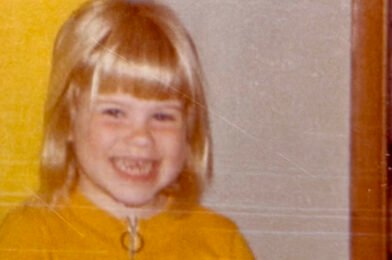
That is what I needed to hear. Over and over again I need to hear these words: “relax, breathe and heal.” As I relax and embrace my scars and my secrets, I wish I had a time machine. I wish I could go back and tell little, freckle-faced me,

“Bethy, it is going to be ok. Relax, breathe. Your bed wetting days will pass. You will heal.”

Honestly, I wish literally anyone would have said,

“Hey Bethy, it is ok to wet the bed. Wetting the bed is normal and what some kids do.”

I cannot time machine myself back. What I can do is move forward. I can learn to relax my pelvic floor. And when I think the next cough or hard swallow will kill me, I can take a cleansing breath. I will be ok. In fact, the other day I coughed. I choked. Then I remembered,

“Relax, breathe. You will heal.”

I am getting there. 

Sitting in that Same Hotel Lobby One Year to the Day (A Journal Entry Of Sorts)

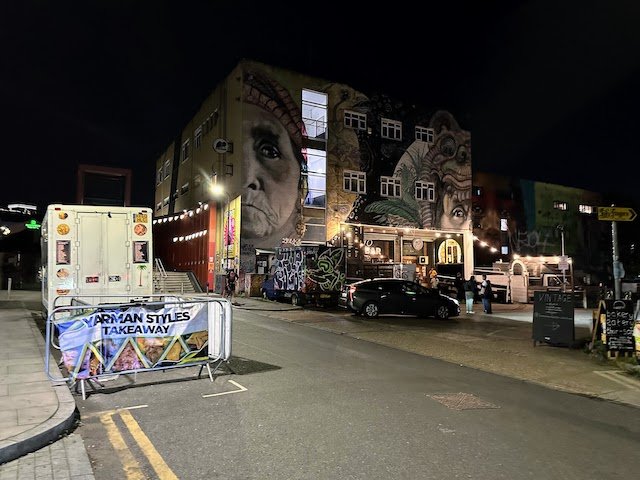
Here I sit in this East London hotel lobby. The chair I sit in is green. The table my laptop sits on is black. My laptop and phone are plugged into a UK outlet with the adapter I remembered to bring. Last year I had to go back to my room when I forgot my adapter there. I remember that. I am sitting adjacent to the cafe. Bottles of San Pellegrino and iced coffee all facing the same direction, face me. An American man sits two tables away, equipped with buzzwords and catchphrases, makes calls as if he were the only one in the room. I can see the reception desk from here. I watch people check in and ask questions. I am sitting in the same spot in the same hotel lobby that I was sitting in 365 days ago. Truth is, I had to move. I am now sitting in the same lobby, in a different spot. I did not not expect to be here, in this spot, or at this hotel.

I wonder where my head was at then. I have yet to reread the post and do not want it to inform what I want to say now. My head is in a good, peaceful, and very exhausted place. Life is hard. I think I am finally letting go and accepting the fact that life will always be hard. 2022 swinging through 2023 has been an extra tough one.

My health is worse, or rather, I am more aware of my not-so-great health: autoimmune heart issues, lingering demon cough and unexplained anemia. My doctors are looking for cancer. There, I said it. They still haven’t found it. I still believe they never will.

Dave’s beard is gone. I liked his beard. I also like Dave clean shaven. Honestly, I really like Dave. We still hold hands. We still make love, (and with each other). We fight less. I honestly think we like each other more, better, I think we accept who the other is better than we ever did before. Is that what growing old together means?

We celebrated our twenty-fifth anniversary in June. We were hiking Spain’s Camino Ingles with our hiking group. I coughed the entire time. My hiking friends, possibly now enemies, thought I had Covid. I did not. On the daily I heard,

“Beth, now so and so is sick and by the way, your cough.”

What I did have is some sort of persistent cough, a cough that has plagued me since May. My physical therapist believes I have PTSD as a result of said cough and suggested I see a therapist,

“People don’t realize how a cough can mess with someone’s head. Are you talking to anyone?”

On the day of our twenty-fifth wedding anniversary our group hiked to a beach. The sun was bright. Half the group stripped down to their underwear and swam in the cool Spanish waters. I did not swim. I could hardly get my socks off. Instead, I sat in the shade eating slices of turkey as I watched Dave devour an orange. That night as Dave ate dinner with the group, I was absent as a result of heat stroke. The texts arrived,

“Beth, the group toasted to you and Dave. It was weird that you were not here.”

I feel like I still keep waiting to “be here,” and celebrate our mighty accomplishment. Instead, I have been sick and been preoccupied with tests, blood draws and procedures. My sudden poor health has forced me to stop. For someone who does not sit still well, being stopped woke me up. I sincerely believe I did stop sweating the small stuff. I need to get well. Not setting boundaries was keeping me sick. Consequently, I started saying no to everything, and completely distanced myself from anything or anyone who caused my throat to tighten. I would text,

“I am sorry I cannot talk. I cough so hard that I throw up.”

It wasn’t a lie. I vomit-coughed every day. Twice I woke up and cough vomited so violently that I could not take a breath. I could not move air into my body. As I knelt naked on all fours on our bathroom floor, tears streamed down my face. In a quiet, desperate wheeze, I pleaded, “Dave, I do not want to die. Please don’t let me die.” I do not know how I moved from that one moment to the next. Yet, I did not die.

I spent a lot of time alone, trying not to cough. I started holding my breath.

“Beth, you are holding your breath.” Dave would say.

Then I would breathe. I spent so much time alone, trying to breathe and trying not to cough.Then loneliness sort of became my friend. I am still not a fan of being alone. I am a new fan of taking care of myself.

As I sat in my room coughing and watching a reality show literally called, “Alone,” I promised myself if I rested the entire month of August, we could make our scheduled trip to London in September. I rested and became more anemic. I still traveled to London, celebrating with Kyle before he headed off to New York. While here, we drove Kyle to Oxford to meet up with friends. Since then, Kyle’s light turned back on. What a gift. He and I talked about the moment everything shifted.

“Mom, you know when my switch flipped?”

“When?”

“When I met up with my friends.” 

Dave traveled to Poland. I wanted to spend time with Kyle before he left so I decided to skip Warsaw and meet Dave here. Life is fleeting and I want to grab as many moments with my kids as they will permit.

Kyle drove me to the airport. We said what we thought were strange goodbyes.

“You’re taking me to the airport and you are moving later today.”

“I know. It is so weird. Sort of backwards and also right.” ❤️

Kyle landed in New York moments after I landed in London. Serendipity. 

I gathered my things and made my way to the Tube. As I watched people buy tickets for the Elizabeth Line, I thought,

“Suckers! Don’t they realize they don’t have to buy a ticket? They can simply tap on with a credit card.”

I caught myself and admitted that last year I was just getting comfortable riding the tube. I told myself that I preferred to walk or Uber. I think I was scared. Then after one exhausting walk from East London to Covent Garden to the British Museum and back, with an accompanying Banksy-sighting, I decided it was time to embrace London’s public transit system. I have never looked back. 

And now here I sit in our east London hotel lobby.  Eli texted moments ago. I love hearing from him. He thinks he sprained his wrist climbing. I feel far away. I hope he is ok. I also did not think I would be here. I am deeply grateful. [I write as my tears fall.]

Tagged :